Friday, 21 May 2021

Zdzisław Beksiński

ZDZISŁAW BEKSIŃSKI'S ART

Zdzisław Beksiński (born February 24, 1929, Sanok, Poland/ died February 21, 2005) was a Polish painter, photographer and sculptor specializing in the field of dystopian surrealism.

Beksiński had no formal training as an artist. His paintings were mainly created using oil paint on hardboard panels which he personally prepared. He was interested in sculpting and photography.

His creations were made mainly in two periods. The first period of work is generally considered to contain expressionistic color, with a strong style of "utopian realism" and surreal architecture, like a doomsday scenario. The second period contained more abstract style, with the main features of formalism.

He soon became the leading figure in contemporary Polish art. In the late 1960s, Beksiński entered what he himself called his "fantastic period", which lasted up to the mid-1980s. This is his best-known period, during which he created very disturbing images, showing a gloomy, surrealistic environment with very detailed scenes of death, decay, landscapes filled with skeletons, deformed figures and deserts. These paintings were quite detailed, painted with his trademark precision.

"Pełzająca śmierć"

None of his works have a title, because author didn't want
to suggest anything and wanted everybody to have their own interpretation of his paintings. Although some of his most famous works have unofficial titles, given by people, for example "Pełzająca śmierć" (which is my favourite painting)

Zdzisław Beksiński is my favourite Polish painter, his style and way of presenting emotions is really impressing to me. His paintings make me wonder about the essence of life. 


Thursday, 20 May 2021

Gustav Klimt

 GUSTAV KLIMT'S ART

Gustav Klimt (born July 14, 1862, Vienna, Austria/ died February 6, 1918, Vienna)was an Austrian symbolist painter, a founder of  shool of painting - Vienna Secession. 

Symbolism is a literary device that uses symbols, be they words, people, marks, locations, or abstract ideas to represent something beyond the literal meaning.

His early work had a classical style that was typical of late 19th-century academic painting, as can be seen in his murals for the Vienna Burgtheater (1888)

In 1897 Klimt’s mature style emerged, and he founded the Vienna Secession- a group of painters who revolted against academic art in favour of a highly decorative style.

His later murals are characterized by precisely linear drawing and the bold and arbitrary use of flat, decorative patterns of colour and gold leaf.

Klimt’s most successful works include "The Kiss: and a series of portraits of fashionable Viennese matrons, such as "Adele Bloch-Bauer I". In these works he treats the human figure without shadow and heightens the lush sensuality of skin by surrounding it with areas of flat, highly ornamental, brilliantly composed areas of decoration.

I think Klimt's paintings are unique and breathtaking, when I look at his paintings I feel emotions connected with them. I love the way he express his visions and puts it on canvas. 

"The Kiss"


"Adele Bloch-Bauer I"


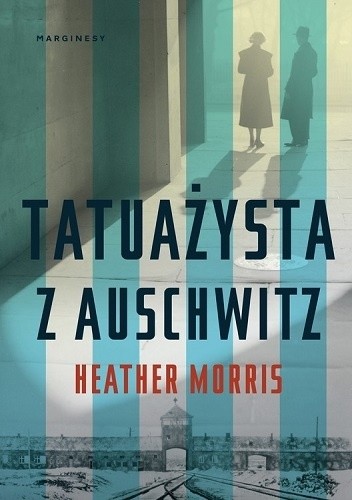
The Tattooist of Auschwitz

 THE TATTOOIST OF AUSCHWITZ I read this book some time ago and decided to write about it because I think it's really recommendable. The ...